
Selladores para roscas de tuberías
Selladores para roscas metálicas de tuberías de agua, gas, calefacción y aire comprimido
Los compuestos selladores para uniones roscadas obturan la vía helicoidal de fuga entre roscas metálicas macho y hembra compatibles. Esta categoría contiene dos productos diferentes. La pasta selladora VITCAS para uniones roscadas es un producto de 400 g, listo para usar y no endurecible, indicado para agua caliente y fría, gas natural, GLP en fase de vapor y vapor a baja presión, con límites publicados de 7 bar y 200 °C. Permanece flexible y lubrica las roscas para facilitar el montaje y el posterior desmontaje. El PTFE líquido es un gel anaeróbico de 50 ml a base de metacrilato, destinado a roscas metálicas con un ajuste estrecho y holguras de hasta 0,3 mm. Proporciona un sellado inicial a baja presión, cura cuando queda confinado entre superficies metálicas sin aire y está clasificado hasta 150 °C. La elección debe tener en cuenta el líquido o gas, la combinación de presión y temperatura, el tipo de rosca, el material de la tubería, las homologaciones exigidas y las condiciones de curado. No debe suponerse que ninguno de los productos sea adecuado para tuberías de plástico, servicios de oxígeno, agua potable, refrigerantes o productos químicos agresivos sin una aprobación técnica vigente y expresa. Los trabajos con gas y la prueba final de estanqueidad deben ser realizados por una persona debidamente cualificada.
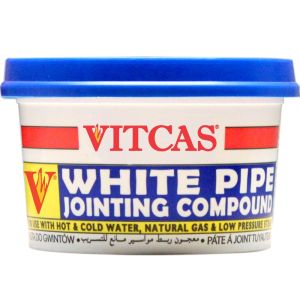 Pasta selladora para roscas de tuberías de gas, agua y calefacciónPrecio especial 3,92 € 3,24 € Regular Price 7,85 € 6,49 €
Pasta selladora para roscas de tuberías VITCAS 400g – Sellador profesional para gas, agua y vapor. Masilla no endurecedora ideal para el sellado de uniones roscadas metálicas en sistemas de fontanería, calefacción y gas. Previene fugas en instalaciones de agua fría y caliente, gas natural y vapor a baja presión. Compatible con cobre, latón, acero y otros metales. Cumple con las normativas BS EN 751-2 y BS 6956 Parte 5.
Saber más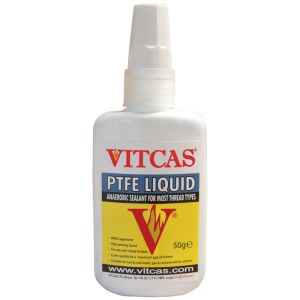 PTFE LIQUIDO- Anaerobico sellador de roscas de tuberíasPrecio especial 10,21 € 8,44 € Regular Price 14,14 € 11,69 €
Vitcas® Liquido PTFE es un único componente anaeróbico para la unión de tuberías en las juntas de metal. El producto proporciona instantáneamente un sellado de baja presión y se cura espontánea y rápidamente cuando está limitado sin aire entre superficies de metal cerradas.
Saber más
Cómo elegir un sellador para conexiones metálicas roscadas de tuberías
Un sellador de roscas para tuberías rellena las holguras microscópicas y la vía helicoidal de fuga que quedan al apretar las roscas metálicas macho y hembra. Refuerza la estanqueidad de la unión mecánica, pero no repara accesorios agrietados, no restaura roscas mal mecanizadas ni compensa una combinación de roscas inadecuada. Para elegir correctamente, es necesario confirmar el fluido transportado, la presión máxima, las temperaturas de funcionamiento y transitorias, el tipo de rosca, el material del accesorio, el diámetro de la tubería, las condiciones de curado y las homologaciones reglamentarias.
Los dos productos de esta categoría emplean mecanismos de sellado diferentes. La pasta selladora blanca para uniones roscadas no endurece y permanece flexible. El PTFE líquido es una resina anaeróbica de metacrilato que polimeriza cuando queda confinada entre superficies metálicas con un ajuste estrecho y sin contacto con el aire. No deben considerarse intercambiables únicamente porque ambos se apliquen a roscas de tuberías.
Comparativa de productos
| Propiedad | Pasta selladora VITCAS para uniones roscadas | Sellador anaeróbico líquido con PTFE para roscas |
|---|---|---|
| Formato del producto | Pasta de color crema o beige, lista para usar, de 400 g | Gel azul claro, listo para usar, de 50 ml |
| Mecanismo de sellado | Compuesto no endurecible que rellena las holguras de la rosca y permanece flexible | Resina anaeróbica que cura cuando queda confinada entre superficies metálicas próximas y sin aire |
| Temperatura publicada | Hasta 200 °C | Hasta 150 °C |
| Presión publicada | Hasta 7 bar | Se indica un sellado inmediato a baja presión, pero la página del producto no publica un valor numérico para la presión final |
| Fluidos indicados | Gas natural, GLP en fase de vapor, vapor a baja presión y agua caliente o fría | Agua caliente y fría, gas y aire comprimido |
| Unión y sustrato | Uniones metálicas roscadas de tuberías; se indica que no es corrosivo para aluminio, latón, cobre, acero bajo en carbono y zinc | Uniones metálicas roscadas con ajuste estrecho y holguras de hasta 0,3 mm |
| Normas publicadas | El producto declara conformidad con BS EN 751-2:1997 y BS 6956-5:1992 | El producto hace referencia a ensayos sobre metal conforme a ISO 10964; la página no declara conformidad con BS EN 751-1 |
| Desmontaje | Su carácter no endurecible facilita el ajuste y el desmontaje | Su baja resistencia mecánica tras el curado está concebida para permitir el desmontaje con herramientas manuales convencionales |
Pasta selladora no endurecible para uniones roscadas
El compuesto blanco se utiliza como pasta selladora flexible en tuberías metálicas roscadas compatibles. Rellena las imperfecciones locales de la rosca y también lubrica la unión durante el apriete, lo que ayuda a reducir el gripado y el agarrotamiento. Como no cura formando un polímero rígido, normalmente la unión puede ajustarse o desmontarse con mayor facilidad durante el mantenimiento.
La página del producto indica su uso con gas natural, GLP, vapor a baja presión y agua caliente o fría, con valores máximos de 7 bar y 200 °C. No debe suponerse que ambos máximos sean aplicables simultáneamente a todos los fluidos. El intervalo de presión y temperatura admisible puede ser inferior para un servicio concreto de gas, agua o vapor. Obtenga la documentación técnica vigente y verifique las condiciones exactas de servicio antes de especificar el producto.
Sellador anaeróbico líquido con PTFE para roscas
El PTFE líquido se describe como un sellador anaeróbico monocomponente a base de resina metacrílica. Permanece líquido mientras está expuesto al aire, pero cura al quedar confinado entre roscas metálicas con un ajuste estrecho. El producto está indicado para holguras de rosca de hasta 0,3 mm y ofrece su mejor rendimiento de curado aproximadamente entre 20 y 25 °C. Las temperaturas inferiores, los metales pasivos y las holguras mayores pueden retrasar la polimerización.
El sellado inmediato a baja presión indicado es una propiedad de estanqueidad inicial; no demuestra que el producto haya curado por completo ni autoriza a aplicar inmediatamente la presión final del sistema. Durante la instalación deben respetarse el tiempo de fijación documentado, el tiempo de curado completo y el programa de pruebas de presión. Estos valores no aparecen actualmente en la página del producto y deben consultarse en la ficha técnica más reciente.
A pesar de su nombre, el PTFE líquido no es simplemente cinta de PTFE en formato líquido. Es una resina anaeróbica de curado que requiere dos superficies metálicas adecuadas, un acoplamiento estrecho de las roscas y unas condiciones de curado apropiadas.
Tipos de conexión adecuados
Ambos productos están destinados a conexiones metálicas roscadas. Confirme que las normas de las roscas macho y hembra sean mecánicamente compatibles y permitan formar la unión prevista. Un sellador no puede hacer aceptable una combinación incompatible de rosca cilíndrica y cónica, corregir un roscado cruzado ni restaurar un accesorio que se haya apretado en exceso.
No utilice estos compuestos como sustituto general de:
- anillos u olivas de compresión;
- juntas planas para bridas;
- juntas tóricas y juntas elastoméricas;
- conectores de tubería de inserción a presión;
- tuberías de plástico unidas mediante adhesivo disolvente o termofusión;
- conexiones soldadas, brasadas o de prensado;
- accesorios dañados que deban sustituirse.
Si un accesorio combina una sección roscada con otro elemento de estanqueidad, determine qué superficie debe crear el cierre. La aplicación del compuesto en una zona incorrecta puede dificultar el montaje o contaminar el sistema sin mejorar la estanqueidad.
Compatibilidad con metales y plásticos
La pasta selladora blanca para uniones roscadas está indicada como no corrosiva para aluminio, latón, cobre, acero bajo en carbono y zinc. El PTFE líquido está especificado para roscas metálicas. La velocidad de curado anaeróbico puede variar entre metales activos, metales pasivos como el acero inoxidable y superficies revestidas o chapadas. Confirme si se necesita un activador cuando la velocidad de curado sea crítica.
No aplique ninguno de los productos a roscas de plástico a menos que se haya aprobado conjuntamente el plástico concreto, el diseño de la unión y el sellador. Algunos selladores de roscas pueden provocar fisuración por tensión en los termoplásticos, y su efecto lubricante puede facilitar un apriete excesivo y la rotura de un accesorio hembra de plástico. Un producto destinado a roscas metálicas no es automáticamente compatible con accesorios de PVC, CPVC, ABS, nailon, polipropileno o materiales compuestos.
Sistemas de agua y calefacción
El compuesto blanco está indicado para agua caliente y fría y se asocia con BS EN 751-2 y BS 6956-5. El ámbito de estas normas incluye determinadas uniones metálicas roscadas utilizadas con agua de calefacción y, en el caso de BS 6956-5, aplicaciones especificadas de agua y vapor saturado a baja presión. Esto no demuestra por sí solo que el producto esté homologado para agua potable.
Cuando el agua se destine al consumo humano, obtenga documentación vigente que acredite la homologación reglamentaria o para agua potable exigida para el producto concreto. La indicación «no tóxico» y la idoneidad general para agua no sustituyen la aceptación WRAS ni cualquier otra homologación exigida por la autoridad, la especificación o la jurisdicción correspondiente.
En circuitos cerrados de calefacción central, compruebe la compatibilidad con inhibidores de corrosión, anticongelantes de glicol, productos químicos de limpieza y otros tratamientos. Una declaración genérica de idoneidad para agua no constituye una tabla completa de compatibilidad química.
Gas natural y GLP
La pasta selladora blanca para uniones roscadas declara conformidad con BS EN 751-2:1997. Esta norma cubre compuestos no endurecibles para uniones metálicas roscadas en contacto con gases de la primera, segunda y tercera familia; el GLP se contempla en fase de vapor y no en fase líquida. El producto también incluye el gas natural y el GLP entre sus aplicaciones.
Los trabajos con gas deben ser realizados y comprobados por una persona legalmente habilitada para el tipo de instalación y de gas. En viviendas del Reino Unido, esto suele requerir un técnico inscrito en Gas Safe con la categoría de competencia correspondiente. El técnico debe confirmar que el producto, la rosca, el diámetro de la tubería y la presión se encuentran dentro del ámbito de la norma aplicable y de las reglas de instalación.
La página del producto anaeróbico menciona el gas, pero no declara conformidad con BS EN 751-1, la norma que cubre específicamente los compuestos anaeróbicos para uniones en determinadas aplicaciones de gas y agua de calefacción. No debe inferirse una certificación a partir del mecanismo de curado ni de los ensayos conforme a ISO 10964. Obtenga la documentación de homologación necesaria antes de utilizarlo en tuberías de gas sujetas a regulación.
Vapor, aire comprimido y fluidos industriales
El compuesto blanco está indicado para vapor a baja presión, con valores máximos publicados de 7 bar y 200 °C. La presión del vapor y la temperatura de saturación están relacionadas, por lo que debe comprobarse la condición realmente permitida en lugar de seleccionar la presión y la temperatura de forma independiente. Confirme si se trata de vapor saturado, vapor húmedo o vapor sobrecalentado y respete el intervalo de funcionamiento aprobado del producto.
El aire comprimido figura entre las aplicaciones del sellador anaeróbico. Verifique la presión, la temperatura, el lubricante del compresor, el condensado y la calidad de aire requerida. Ninguno de los productos debe recomendarse para aire respirable, gases medicinales u otros servicios de gases de alta pureza sin una homologación expresa.
La página actual del compuesto blanco contiene referencias generales al petróleo crudo, combustibles, fluidos hidráulicos, refrigerantes, disolventes y sistemas de procesamiento químico y generación de energía. Estos usos requieren datos específicos de compatibilidad con el fluido y de presión y temperatura que no se publican en la página. No presuponga su idoneidad sin una confirmación técnica por escrito.
Oxígeno y otros gases oxidantes
No utilice ninguno de los compuestos en servicios enriquecidos con oxígeno a menos que el producto concreto disponga de compatibilidad documentada con oxígeno para la presión y el nivel de limpieza requeridos. Los aceites, las grasas y muchos selladores orgánicos pueden presentar un grave riesgo de ignición en sistemas de oxígeno. El oxígeno medicinal, el oxígeno industrial y otros gases oxidantes requieren materiales homologados y procedimientos especializados de limpieza y montaje.
Normas y alcance de sus requisitos
La pasta selladora declara conformidad con BS EN 751-2:1997 y BS 6956-5:1992. BS EN 751-2 trata sobre materiales de sellado no endurecibles para uniones metálicas roscadas en contacto con las familias de gases especificadas y agua caliente en sistemas de calefacción. BS 6956-5 cubre compuestos para uniones destinados a las aplicaciones indicadas de agua, vapor saturado a baja presión y gases de la primera y segunda familia, incluidas condiciones definidas de presión, temperatura, diámetro de tubería y tipo de rosca.
La referencia a una norma debe interpretarse junto con su clasificación, ámbito de aplicación y las instrucciones del fabricante. No significa que el compuesto sea adecuado para todos los gases, todos los servicios de agua, todos los tamaños de rosca o cualquier producto químico industrial. En proyectos regulados, conserve el certificado o la declaración vigente del producto en lugar de basarse únicamente en la descripción de la categoría.
El producto anaeróbico hace referencia a ISO 10964. Este ensayo compara el par necesario para aflojar adhesivos anaeróbicos aplicados a elementos de fijación roscados. Resulta útil para evaluar el comportamiento de bloqueo o desmontaje, pero no constituye una homologación de presión para tuberías, un certificado para gas ni una norma de compatibilidad química.
Preparación de las roscas
- Aísle, despresurice y vacíe el sistema, y aplique el procedimiento de seguridad exigido para el fluido transportado.
- Confirme que ambos accesorios sean metálicos, estén correctamente emparejados y se encuentren dentro de los límites de tamaño y servicio permitidos para el sellador.
- Retire el material de sellado antiguo sin dañar el perfil de la rosca.
- Elimine aceite, grasa, incrustaciones, corrosión, virutas, polvo y otros contaminantes.
- Compruebe si existen rebabas, grietas, deformaciones, roscado cruzado o desgaste excesivo. Sustituya los accesorios defectuosos.
- Deje que los productos de limpieza se evaporen por completo antes de aplicar un sellador anaeróbico.
Una buena preparación es esencial. Aplicar una mayor cantidad de compuesto no compensa un acoplamiento insuficiente de la rosca ni los daños mecánicos. Los productos de limpieza también deben ser compatibles con la tubería y el servicio previsto.
Aplicación de la pasta selladora VITCAS para uniones roscadas
- Utilice la pasta tal como se suministra, salvo que las instrucciones vigentes indiquen expresamente que deba removerse.
- Aplique una capa uniforme alrededor de la rosca macho limpia.
- Evite acumular demasiado material en el primer hilo de rosca y en el interior de la tubería para reducir la extrusión interna.
- Monte el accesorio correspondiente y apriételo con las herramientas adecuadas, siguiendo las indicaciones de par o acoplamiento.
- Retire el exceso exterior e inspeccione la unión.
- Antes de poner el sistema en servicio, realice la prueba de estanqueidad correspondiente.
No añada disolvente, aceite ni otro producto sellador para modificar la consistencia. Si se plantea utilizar fibra, cáñamo o cinta de PTFE como material adicional, confirme que la combinación esté expresamente permitida; la combinación de sistemas de sellado no verificados puede modificar el par de montaje e invalidar la homologación.
Aplicación del sellador anaeróbico líquido con PTFE
- Limpie y desengrase ambas roscas metálicas y déjelas secar.
- Aplique una cantidad continua alrededor de la rosca macho, evitando que entre un exceso incontrolado en la tubería.
- Realice el montaje rápidamente para que el sellador quede confinado en la holgura de la rosca.
- Apriete la unión hasta obtener la alineación y el acoplamiento requeridos.
- Respete los tiempos de fijación y curado completo correspondientes a los metales, la holgura y la temperatura ambiente.
- Realice la prueba de presión especificada solo cuando la unión haya alcanzado el rendimiento de sellado requerido.
El sellador que queda fuera de la unión permanece expuesto al aire y puede seguir líquido; esto no indica necesariamente un fallo del material confinado entre las roscas metálicas. Limpie de forma segura los residuos superficiales. Si la unión se afloja después del curado, desmóntela, limpie las roscas y aplique material nuevo antes de volver a montarla.
Pruebas de presión y puesta en servicio
Todas las conexiones terminadas deben someterse a la prueba de fugas o estanqueidad especificada para la instalación. El fluido de prueba, la presión, la duración y los criterios de aceptación dependen de si el sistema contiene agua, gas, vapor o aire comprimido. Nunca compruebe una fuga de gas con una llama abierta.
Un sellado inicial a baja presión no equivale a una unión de trabajo completamente curada u homologada. Durante las pruebas, no supere la presión nominal del sellador, el accesorio ni la tubería. Investigue cualquier pérdida de presión en lugar de apretar una unión activa o presurizada. Después de la reparación, repita íntegramente la prueba exigida.
Desmontaje y mantenimiento
El compuesto no endurecible permanece flexible, mientras que el sellador anaeróbico curado se describe como un material con una resistencia mecánica suficientemente baja para permitir el desmontaje con herramientas manuales convencionales. La facilidad de desmontaje también depende del tamaño del accesorio, la corrosión, el par de montaje y el historial de servicio.
Una vez alterada una unión, no confíe en el sellado anterior. Separe los accesorios, retire el material antiguo, inspeccione y limpie las roscas y vuelva a sellarlas con un compuesto compatible nuevo. Los ajustes repetidos pueden dañar el acoplamiento de las roscas o introducir residuos en el sistema.
Resolución de problemas en uniones roscadas con fugas
| Problema observado | Posible causa | Medida necesaria |
|---|---|---|
| Fuga inmediatamente después del montaje | Cobertura insuficiente, roscas incompatibles, contaminación, acoplamiento deficiente o accesorio dañado | Aísle y desmonte la unión; inspecciónela, límpiela y vuelva a montarla en lugar de aplicar pasta en el exterior. |
| El sellador anaeróbico no cura dentro de la unión | Componente de plástico, holgura excesiva, baja temperatura, metal pasivo, contaminación o tiempo de curado insuficiente | Confirme la idoneidad del sustrato y la holgura, y consulte en la documentación técnica los requisitos de curado o del activador. |
| El accesorio se agrieta o deforma | Apriete excesivo, geometría de rosca incompatible o accesorio vulnerable de plástico o metal | Sustituya el accesorio y corrija el diseño de la unión o el método de montaje. |
| Se produce una fuga durante el servicio | Presión o temperatura excesivas, vibraciones, incompatibilidad química, corrosión o movimiento mecánico | Ponga el sistema fuera de servicio de forma segura y determine la causa antes de volver a sellarlo. |
Almacenamiento y manipulación segura
- Lea la etiqueta, la ficha técnica y la ficha de datos de seguridad vigentes antes de utilizar el producto.
- Mantenga los recipientes cerrados cuando no se utilicen y protéjalos de la contaminación.
- Almacene el producto dentro del intervalo de temperatura indicado por el fabricante y alejado del calor o de la luz solar directa.
- Utilice la protección ocular, cutánea y de las manos especificada para el producto y el agente de limpieza.
- Evite que el sellador y los residuos de limpieza entren en los desagües o en el interior de la tubería terminada.
- Elimine el producto no utilizado, los paños contaminados y los envases vacíos de acuerdo con los requisitos locales.
Preguntas frecuentes
¿Para qué sirve una pasta selladora para uniones roscadas de tuberías?
Rellena las holguras y la vía helicoidal de fuga entre las roscas metálicas acopladas, ayudando a que la unión mecánica forme un cierre estanco al agua o al aire para los fluidos y las condiciones de funcionamiento aprobados.
¿Cuál es la diferencia entre una pasta selladora y el PTFE líquido?
La pasta selladora para uniones roscadas no endurece y permanece flexible. El PTFE líquido es un gel anaeróbico a base de metacrilato que cura después de quedar confinado sin aire entre roscas metálicas con un ajuste estrecho.
¿Qué producto soporta una temperatura más alta?
La pasta selladora VITCAS para uniones roscadas está indicada hasta 200 °C. El producto anaeróbico de PTFE líquido está indicado hasta 150 °C. La temperatura por sí sola no es suficiente para elegir el producto; también deben comprobarse el fluido, la presión, la rosca y las homologaciones.
¿Para qué presión está clasificada la pasta selladora?
La página del producto indica un máximo de 7 bar. Confirme la combinación permitida de presión, temperatura y fluido, ya que es posible que los valores máximos no sean aplicables simultáneamente a todos los servicios.
¿Cuál es la presión nominal del PTFE líquido?
El PTFE líquido proporciona un sellado inmediato a baja presión, pero no se publica un valor numérico para la presión final. Obtenga la documentación técnica vigente antes de especificar el producto o someterlo a una prueba de presión.
¿Pueden utilizarse estos selladores en roscas de plástico?
No debe presuponerse. Ambos productos se presentan para uniones metálicas roscadas y el producto anaeróbico requiere superficies metálicas para curar correctamente. Algunos selladores y pares de montaje pueden dañar los accesorios termoplásticos.
¿La pasta selladora VITCAS para uniones roscadas es adecuada para tuberías de gas natural?
El producto incluye el gas natural entre sus aplicaciones y declara conformidad con BS EN 751-2:1997. La instalación concreta debe mantenerse dentro del ámbito de la norma, el producto y la normativa, y debe ser realizada y comprobada por una persona debidamente cualificada.
¿Puede utilizarse la pasta selladora para GLP?
El producto incluye el GLP entre sus aplicaciones, mientras que BS EN 751-2 cubre gases especificados de la tercera familia, excepto el GLP en fase líquida. Confirme que la aplicación corresponda a GLP en fase de vapor y cumpla todos los requisitos de instalación vigentes.
¿El PTFE líquido está homologado para gas?
La página del producto incluye el gas entre sus aplicaciones, pero no declara conformidad con BS EN 751-1. ISO 10964 se refiere a ensayos de par en adhesivos anaeróbicos y no constituye una homologación para servicios de gas. Obtenga confirmación documental antes de utilizarlo en instalaciones de gas reguladas.
¿Puede utilizarse la pasta selladora para tuberías de agua potable?
No debe inferirse una homologación para agua potable a partir de una declaración general de idoneidad para agua o de que el producto no sea tóxico. Compruebe si dispone de aceptación WRAS vigente o de la homologación específica para agua potable exigida para el proyecto y la jurisdicción.
¿Puede el compuesto blanco sellar tuberías de vapor?
Está indicado para vapor a baja presión dentro de los límites publicados del producto. Antes de utilizarlo, confirme el estado del vapor permitido, la relación entre presión y temperatura, el diámetro de la tubería y la clasificación conforme a la norma.
¿El PTFE líquido es igual que la cinta de PTFE?
No. Es un sellador anaeróbico de metacrilato que cura y se aplica en forma de gel. La cinta de PTFE es una tira no endurecible que se enrolla alrededor de una rosca y está sujeta a instrucciones y normas de producto diferentes.
¿Qué holgura de rosca puede sellar el PTFE líquido?
La página del producto indica holguras de hasta 0,3 mm. Este límite no puede utilizarse para justificar el sellado de roscas muy desgastadas, emparejadas incorrectamente o dañadas.
¿Cuánto tarda en curar el sellador anaeróbico para roscas?
Los tiempos exactos de fijación y curado completo no se publican en la página actual. El curado depende del tipo de metal, la temperatura y la holgura; se indica un intervalo preferente de curado de aproximadamente 20 a 25 °C.
¿Puede presurizarse el sistema inmediatamente?
Solo dentro de las condiciones documentadas de sellado inicial y prueba de presión. Un sellado inmediato a baja presión no significa que el producto anaeróbico haya alcanzado el curado completo ni su rendimiento final.
¿Dónde debe aplicarse el compuesto?
Aplíquelo de manera uniforme alrededor de la rosca metálica macho limpia, controlando la cantidad para evitar que el exceso entre en el interior de la tubería. Realice el montaje con el método correcto de acoplamiento y apriete.
¿Puede aplicarse el compuesto por fuera para detener una fuga existente?
No. Aísle y despresurice el sistema, desmonte la conexión con fugas, determine la causa, limpie e inspeccione las roscas y vuelva a montar y comprobar correctamente la unión.
¿Puede utilizarse la pasta selladora para tuberías en sistemas de oxígeno?
No sin una homologación expresa para servicios de oxígeno. Las instalaciones de oxígeno requieren materiales de compatibilidad verificada y procedimientos especializados de limpieza y montaje.
¿Pueden estos productos sellar tuberías de aceite, combustible, refrigerante o productos químicos?
Solo con una confirmación por escrito para el fluido, la concentración, la presión y la temperatura concretos. Las páginas actuales no proporcionan una tabla completa de compatibilidad química ni de homologaciones para refrigerantes.
¿Puede desmontarse y reutilizarse una unión sellada?
Los accesorios pueden desmontarse si siguen siendo aptos para el servicio, pero no debe reutilizarse el sellado antiguo. Retire el material anterior, inspeccione y limpie ambas roscas y aplique un compuesto nuevo y homologado antes de volver a montar y comprobar la unión.
¿Quién debe aplicar pasta selladora en tuberías de gas?
Los trabajos con gas deben ser realizados por una persona legalmente habilitada para el sistema. Para trabajos domésticos con gas en el Reino Unido, recurra a un técnico inscrito en Gas Safe y cualificado para el aparato, la instalación y el tipo de gas correspondientes.