
Tratamientos para calefacción central
Protectores para calefacción central - Inhibidores, limpiadores, selladores de fugas y reductores de ruido de caldera
Los tratamientos para calefacción central de Vitcas comprenden una gama de formulaciones químicas de alto rendimiento, desarrolladas para la limpieza, protección y mantenimiento a largo plazo de sistemas de calefacción central tanto cerrados como abiertos. Estos productos están específicamente diseñados para abordar problemas comunes como la corrosión, la formación de cal, la acumulación de lodos y el ruido en calderas, además de ayudar a prevenir la pérdida de presión causada por microfugas internas.
La gama incluye inhibidores del sistema, limpiadores, reductores de ruido de caldera y selladores internos de fugas. Cada uno de estos productos está formulado para optimizar la eficiencia térmica, prolongar la vida útil del sistema y reducir el consumo energético. Son aptos para sistemas de calefacción domésticos y comerciales, compatibles con todos los materiales habituales como hierro, acero, cobre, latón, aluminio y tuberías de plástico, y cumplen con las normas británicas pertinentes.
Aplicaciones principales
-
Protección contra la corrosión y la formación de cal en componentes metálicos
-
Restauración del caudal eliminando lodos, residuos de fundente y otros sedimentos
-
Reducción del ruido en calderas provocado por depósitos en los intercambiadores de calor
-
Sellado de microfugas y prevención de pérdida de presión en sistemas cerrados
-
Preparación de sistemas antes de nuevas instalaciones o recargas de inhibidor
Características técnicas
-
Cumplen con la norma BS 7593 para el tratamiento de sistemas de calefacción domésticos
-
Apto para sistemas totalmente indirectos, incluyendo instalaciones con tuberías de microdiámetro
-
Compatibles con sistemas tanto cerrados como de ventilación abierta
-
Formulaciones no ácidas - seguras para bombas, válvulas y depósitos de expansión
-
En la mayoría de los casos, no requieren vaciado ni enjuague del sistema tras su aplicación
Esta categoría está recomendada por instaladores profesionales, técnicos de mantenimiento y especialistas en calefacción para la prevención de fallos, la puesta en marcha de sistemas nuevos y la recuperación de sistemas antiguos con bajo rendimiento.
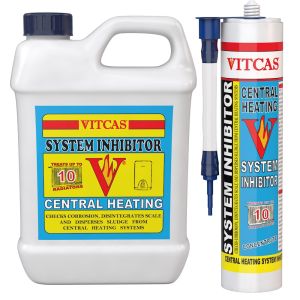 Inhibidor para calefacción central – Protección contra la corrosión y la cal9,43 € 7,79 € Regular Price 25,16 € 20,79 €
Inhibidor para calefacción central VITCAS – Protección avanzada contra la corrosión, la cal y los lodos en sistemas de calefacción sellados y abiertos. Mejora la transferencia de calor y prolonga la vida útil de calderas, radiadores y tuberías de aluminio o de metales combinados.
Saber más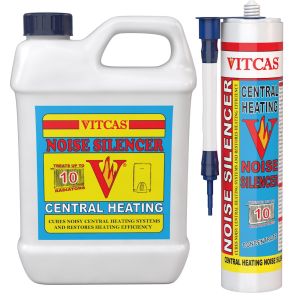 Silenciador de calderas – Reduce el ruido y restaura la eficiencia térmicaTan bajo como 7,85 € 6,49 € Regular Price 25,16 € 20,79 €
El silenciador de calderas VITCAS es un tratamiento duradero y no ácido que elimina los ruidos en la caldera provocados por la acumulación de cal y lodos. Restaura la eficiencia del sistema de calefacción y no requiere enjuague. Apto para sistemas completamente indirectos y seguro para todos los metales, incluido el aluminio.
Saber más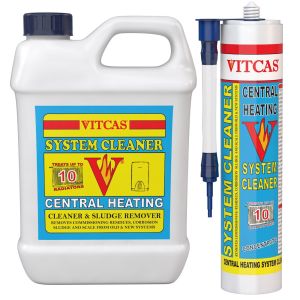 Limpiador para calefacción central – Eliminador de lodos y calTan bajo como 7,85 € 6,49 € Regular Price 25,16 € 20,79 €
El Limpiador y eliminador de lodos para sistemas de calefacción central VITCAS elimina de forma eficaz los residuos de instalación, depósitos de flux e impurezas del sistema en nuevas instalaciones. También restaura la circulación en sistemas de calefacción antiguos afectados por la acumulación de lodos. Se recomienda su uso al sustituir componentes o al ampliar sistemas de calefacción central existentes.
Saber más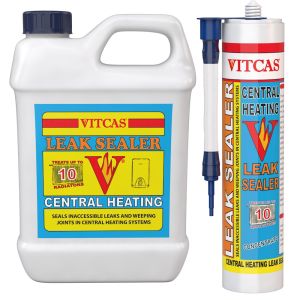 Sellador de fugas para calefacción central – Sella fugas ocultas9,43 € 7,79 € Regular Price 25,16 € 20,79 €
El sellador de fugas para calefacción central VITCAS repara fugas ocultas y uniones con filtraciones en radiadores dentro de sistemas de calefacción sellados. Reduce la pérdida de presión, mejora la circulación y es seguro para aluminio, calefacción por suelo radiante, depósitos de plástico y tuberías de microdiámetro.
Saber más
Choosing Central Heating Water Treatment Chemicals
Correct water treatment depends on the condition of the primary heating circuit. Cleaner removes residues and accumulated contamination; inhibitor provides continuing protection after the system has been cleaned and flushed; boiler noise silencer addresses kettling linked to deposits on heat-exchanger surfaces; and leak sealer targets minor inaccessible water losses in sealed systems. These functions are different, so one treatment should not be substituted for another.
Before dosing, confirm that the installation is a fully indirect system and establish whether it is sealed or open vented. All four products explicitly exclude Primatic single-feed cylinders. Check the boiler manual, system water capacity and any requirements attached to a manufacturer’s warranty or commissioning procedure.
Product Selection Guide
| Product | Primary purpose | Suitable system | What happens after treatment |
|---|---|---|---|
| Central Heating Cleaner | Removes installation debris, flux, limescale and sludge and helps restore circulation | Fully indirect systems, including common metals, aluminium, microbore pipework and plastic header tanks | Circulate for the stated period, then flush out thoroughly and refill |
| Central Heating Inhibitor | Controls corrosion, scale and sludge during normal operation | Sealed or open-vented, fully indirect systems with common metals and compatible non-metallic components | Remains in the circuit for ongoing protection |
| Boiler Noise Silencer | Reduces knocking or kettling associated with limescale and baked-on sludge at the heat exchanger | Sealed, fully indirect systems; compatible with aluminium, common metals, plastic tanks and microbore pipework | Stays in the circuit and does not require flushing |
| Central Heating Leak Sealer | Seals minor inaccessible leaks and weeping joints to reduce primary-circuit pressure loss | Sealed, fully indirect mixed-metal systems, including aluminium | Circulates to form a soft internal seal and remains in the system |
Central Heating System Cleaner
The cleaner is intended for new installations containing flux, manufacturing debris or commissioning residues and for older circuits affected by sludge, limescale, restricted circulation or cold radiator areas. It is also appropriate when a boiler, radiator or other component is replaced, or when an existing system is extended.
Cleaning is a temporary stage rather than continuing protection. The treatment must circulate for the period appropriate to system condition, after which the circuit is drained and flushed until the discharge runs clear. Refill with clean water and add inhibitor at the correct dose. Leaving cleaner in place instead of completing the flush-and-protect sequence is not the specified maintenance method.
Published Cleaner Circulation Times
| System condition | Published circulation period | Next action |
|---|---|---|
| Newly fitted component requiring a quick clean | 2 hours with hot circulation | Drain, flush thoroughly, refill and inhibit |
| New heating installation | 2 weeks | Complete the flush and protection procedure |
| Previously treated system | 3 weeks | Flush until clear before adding inhibitor |
| Older system with sludge accumulation | 4 weeks | Assess flow and consider professional powerflushing if circulation remains poor |
Use the latest label instructions if they differ from these published guide times. A severely blocked circuit may not circulate enough cleaning solution through the affected section and can require mechanical intervention.
Central Heating Inhibitor
Inhibitor is the normal final treatment after cleaning, flushing and refilling. It is designed to protect internal metal surfaces against corrosion while limiting limescale and sludge formation. This supports circulation and heat transfer and can reduce the risk of cold spots, boiler noise and premature damage caused by contaminated system water.
The formulation is described as mineral-oil free and compatible with iron, steel, copper, brass, aluminium, plastic pipework and plastic or glass-fibre header tanks. It is intended to stay in the system. If water is lost through draining, repair or leakage, the inhibitor level may need checking and replenishing according to the maintenance procedure.
Inhibitor cannot repair an existing mechanical defect or remove heavy deposits by itself. Clean a contaminated circuit first, remedy sources of oxygen ingress and correct leaks or component faults that would continually dilute the treated water.
Boiler Noise Silencer
Knocking, rumbling or kettling can occur when limescale and baked-on sludge interfere with heat transfer at the boiler heat exchanger. The non-acid boiler noise silencer is formulated to act on these deposits and reduce the associated noise while remaining compatible with the usual materials found in a fully indirect heating circuit.
The treatment stays in the system and does not require flushing. The product information states that full effect may take between one and six weeks. Radiators should be bled after dosing as instructed, and inhibitor should remain part of the long-term protection plan.
Not every boiler noise is deposit-related. Air, low pressure, poor circulation, pump cavitation, an incorrect bypass setting, a faulty thermostat or a damaged heat exchanger can produce similar symptoms. Persistent or severe noise requires diagnosis by a competent heating engineer rather than repeated chemical dosing.
Central Heating Leak Sealer
Internal leak sealer is intended for minor inaccessible leaks and weeping joints in a sealed primary circuit. It circulates without blocking pumps, valves or automatic air vents and forms a soft internal seal at a small leakage point. The published product information indicates seal formation within approximately 1 to 24 hours under suitable conditions.
This product is not a replacement for repairing an accessible defective fitting, split pipe, corroded radiator, leaking boiler component or failed safety device. Establish the cause of recurring pressure loss before treatment. If pressure continues to fall, isolate the fault and arrange a physical repair.
Do not use leak sealer to mask discharge from a pressure-relief valve or condensate connection. Loss from those components can indicate another system fault and must be investigated using the boiler manufacturer’s procedure.
Recommended Treatment Sequence
- Inspect the system and identify corrosion, deposits, leakage, air ingress or mechanical faults.
- Confirm fully indirect system construction and calculate the circulating water volume.
- Add cleaner where commissioning debris, sludge, scale or flux needs to be removed.
- Circulate for the stated time, drain and flush until the water runs clear.
- Refill, vent the circuit and check for sound circulation.
- Add inhibitor for continuing corrosion and scale protection.
- Use boiler noise silencer or leak sealer only when the diagnosed symptom matches its intended function.
- Record the products, quantities, date, system volume and work completed.
System Type and Compatibility
The treatments are intended for fully indirect central heating circuits, where primary system water is separated from potable domestic hot water. They must not be introduced into drinking-water pipework, domestic hot-water storage or any circuit outside the product’s stated scope.
Inhibitor is listed for sealed and open-vented installations. Cleaner is suitable for fully indirect circuits and may be used with the common metallic and non-metallic materials stated on the product page. Boiler silencer and leak sealer have more specific sealed-system applications. Verify compatibility with any unusual elastomer, heat-transfer fluid, antifreeze, filter media or existing chemical treatment.
Why Primatic Cylinders Are Excluded
A Primatic cylinder uses a single-feed arrangement in which the heating circuit and stored domestic-water system are not separated in the same manner as a conventional fully indirect installation. All four products state that they are unsuitable for Primatic single-feed cylinders. If the system configuration is uncertain, identify the cylinder and feed arrangement before adding any chemical.
Dosage and System Volume
Each 1-litre liquid product is specified to treat up to 100 litres of circulating water, broadly equivalent to ten standard radiators. Radiator count is only an estimate: panel size, pipe diameter, boiler or heat-pump water content, cylinders, buffer vessels and underfloor loops can change the actual volume considerably.
Use design information, commissioning records or a measured fill volume where accuracy matters. Underdosing can reduce effectiveness, while unnecessary overdosing departs from the approved formulation. Systems exceeding 100 litres require quantity calculated from the relevant product instructions.
Adding Liquid Treatment
Shake the bottle thoroughly before dosing. Depending on system design and the specific instructions, liquid may be introduced through a feed-and-expansion cistern or through a suitable radiator connection after controlled partial draining. Isolate the boiler and pump whenever required by the stated method.
After refilling, bleed trapped air, restore the correct cold pressure in sealed systems and inspect for leakage. Confirm that the pump circulates through all branches and that valves are returned to their operating positions. Cleaner follows a later drain-and-flush stage; the other treatments remain in place as directed.
Cleaning, Flushing and Magnetic Filters
Chemical cleaner loosens and disperses contamination, but the debris must leave the system during flushing. Drain from appropriate points and continue until the water is clear. Where sludge loading is high, agitate radiators, clean strainers and service any magnetic or combined filter in accordance with its manufacturer’s instructions.
A filter and chemical programme perform complementary functions. A filter can collect circulating magnetic debris, while inhibitor helps control further corrosion and scale. Neither measure compensates for poor system design, persistent oxygen entry or unrepaired leaks.
British Standards and Manufacturer Instructions
For domestic UK installations, plan commissioning and maintenance with reference to the current BS 7593:2019+A1:2024 code of practice, alongside boiler, component and treatment-product instructions. The standard covers preparation, cleaning, flushing and ongoing water treatment in domestic sealed and open-vented heating and cooling circuits.
Do not infer certification of a particular chemical solely because the category refers to a standard. Product performance declarations and any test evidence must be checked in current manufacturer documentation.
When Chemical Treatment Is Not Enough
- Repair visible leaks, damaged valves, failed seals and corroded components physically.
- Investigate repeated pressure loss rather than continually topping up with fresh water.
- Correct failed expansion vessels, pressure-relief valves and filling-loop faults.
- Use professional powerflushing or component removal where flow is severely restricted.
- Diagnose boiler fault codes and combustion or electrical problems separately.
- Do not use water treatment products in potable-water or open domestic hot-water circuits.
Handling and Storage
- Read the current label and safety data before use.
- Wear the stated eye and skin protection and clean spills promptly.
- Keep containers closed, upright and protected from frost and excessive heat.
- Store away from children, food and drink.
- Do not mix different products together outside the heating circuit.
- Dispose of drained system water and empty packaging under applicable local requirements.
Maintenance Records
Record system volume, product name, quantity, batch where relevant, cleaning period, flushing method and final treatment date. Note any radiator, boiler or pipework changes that could alter volume or introduce fresh untreated water. These records support later servicing and reduce the risk of incompatible or duplicated dosing.
Frequently Asked Questions
Which central heating treatment should I use?
Use cleaner for sludge, scale, flux and commissioning debris; inhibitor for continuing system protection; boiler noise silencer for deposit-related kettling; and leak sealer for minor inaccessible leakage in a sealed circuit.
How much system water does one bottle treat?
One litre treats up to 100 litres of system water, approximately ten standard radiators. Calculate from actual system volume where possible because radiator count is only a guide.
Should cleaner remain in the heating system?
No. Circulate it for the period stated for the system condition, then drain and flush thoroughly. Refill with clean water and add inhibitor.
Does inhibitor need to be flushed out?
No. It is intended to remain in a clean, fully indirect heating circuit to provide ongoing protection against corrosion, scale and sludge.
Can inhibitor clean a badly sludged system?
No. Use system cleaner and complete the required flushing first. Severe restriction may require professional powerflushing or removal of blocked components.
What causes boiler kettling?
Limescale or baked-on sludge at the heat exchanger can impede heat transfer and cause local boiling noises. Air, pump, pressure, flow and component faults can produce similar symptoms.
How long does boiler noise silencer take to work?
The published product guidance allows between one and six weeks for full effect. Persistent noise should be diagnosed rather than treated repeatedly.
Does boiler noise silencer require flushing?
No. It remains in the system. Use it in a correctly cleaned and protected fully indirect circuit and follow the radiator-bleeding instructions.
What type of leak can internal leak sealer repair?
It is intended for minor inaccessible leaks and weeping joints in sealed primary heating circuits. Accessible, substantial or recurring leaks require physical diagnosis and repair.
Will leak sealer block pumps or valves?
The formulation is designed to circulate without blocking pumps, valves or automatic air vents when correctly dosed in a compatible system.
Can these products be used with aluminium radiators?
The products are listed as compatible with aluminium and the common metals used in central heating systems. Follow the boiler and component manufacturers’ water-treatment requirements.
Are the treatments suitable for microbore pipework?
Yes, the product information includes microbore systems. A heavily restricted microbore circuit may still need specialist cleaning and flow assessment.
Can they be used in an open-vented system?
Inhibitor is listed for open-vented as well as sealed fully indirect systems. Check the individual cleaner or remedial product instructions before dosing.
Are they suitable for Primatic cylinders?
No. All four products are stated to be unsuitable for Primatic single-feed cylinders.
Can the treatment enter domestic hot water?
No. These chemicals are intended for fully indirect primary heating circuits. They must not be added to potable or domestic hot-water supplies.
Should a new heating system be cleaned?
Yes. Cleaning removes flux, manufacturing residues and installation debris before the circuit is flushed, refilled and protected with inhibitor.
Should inhibitor be replaced after draining?
Water lost during draining or repair can reduce the treatment level. Re-dose according to the refilled system volume and current product instructions.
Can water treatment fix recurring pressure loss?
Leak sealer may address a minor inaccessible leak, but recurring pressure loss can indicate a component, expansion-vessel or safety-valve fault that requires investigation.
What should be checked before dosing?
Identify system type, water volume, boiler requirements, existing chemicals, component materials, the diagnosed problem and whether the circuit can circulate and be flushed effectively.