
Stove, Fireplace & Flue Sealants
Heat Resistant Sealants & Jointing Compounds for Stoves, Fireplaces & Flues
Vitcas supplies stove, fireplace and flue sealants for sealing, jointing, fixing and repairing heat-exposed areas around wood-burning stoves, fireplaces, flue pipes and chimney systems. The range includes fire cement, flue cement and high-temperature sealing compounds, together with specialist fillers and bonding products for associated fireplace and stove construction work.
Different products are intended for different types of joint and substrate, including fire bricks, flue liners, ceramics, metals, glass and heat-resistant construction materials. Select the product according to its intended function, service temperature, substrate and exposure conditions rather than using temperature rating alone as the deciding factor.
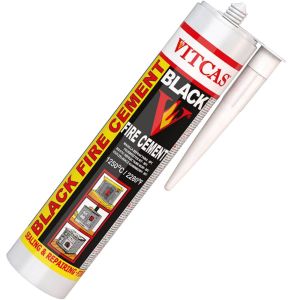 Masilla refractaria negra VITCAS BFC – 1250 °CPrecio especial 4,71 € 3,89 € Regular Price 7,85 € 6,49 €
Masilla refractaria negra para aplicaciones domésticas e industriales, ideal para su uso en ladrillos refractarios, parrillas, tubos de humos, calderas y otras zonas expuestas a temperaturas extremas. Ofrece una excelente adherencia sobre ladrillos refractarios, bloques, piedra y piezas de barro cocido. Resistente a temperaturas de hasta 1250 °C.
Saber más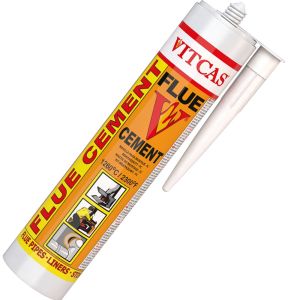 Masilla refractaria para conductos de humo 1250 °CPrecio especial 3,13 € 2,59 € Regular Price 7,85 € 6,49 €
Vitcas FC masilla refractaria para conductos de humo es un mortero ignífugo premezclado de alta temperatura, especialmente formulado para la instalación segura y el sellado de juntas en conductos de arcilla y hormigón. Es ideal para su uso en chimeneas y estufas domésticas que funcionen con carbón, leña o gas, incluidos aparatos con efecto llama.
Saber más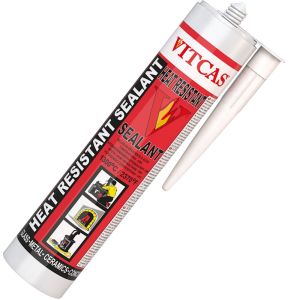 Sellador resistente al calor 1300 °CPrecio especial 12,57 € 10,39 € Regular Price 15,72 € 12,99 €
El sellador resistente al calor VITCAS HRS es una masilla de sellado y calafateo diseñada para fijar, unir y proporcionar protección contra el fuego. Resiste temperaturas de hasta 1300 °C, lo que lo hace ideal para el sellado y la unión de superficies de cerámica, metal, materiales silíceos y vidrio en entornos de alta temperatura.
Saber más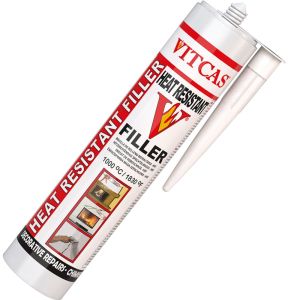 Vitcas HRF – Masilla de relleno resistente al calor 1000 °CPrecio especial 15,72 € 12,99 € Regular Price 31,45 € 25,99 €
Vitcas HRF - Masilla de relleno resistente al calor es la solución perfecta para rellenar pequeñas grietas y juntas en entornos de alta temperatura. Ideal para el sellado de juntas entre placas resistentes al calor, esta masilla ofrece una resistencia térmica insuperable de hasta 1000 °C, garantizando durabilidad y fiabilidad.
Saber más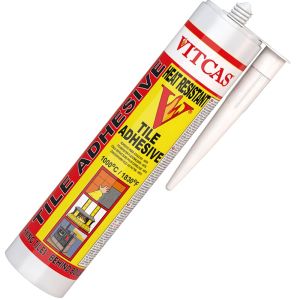 Adhesivo para azulejos resistente al calor VITCAS – 1000°CPrecio especial 4,71 € 3,89 € Regular Price 11,79 € 9,74 €
Adhesivo para azulejos resistente al calor Vitcas HRTA, en formato cartucho, para una aplicación fácil y precisa. Este adhesivo debe utilizarse para fijar azulejos en zonas sometidas a altas temperaturas, como revestimientos de chimeneas, detrás de calderas, cocinas, estufas y radiadores.
Saber más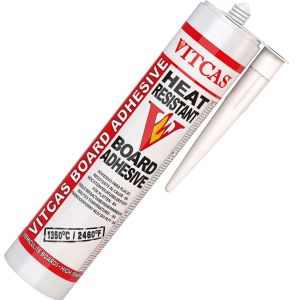 Adhesivo para placas resistentes al calor VITCASPrecio especial 15,72 € 12,99 € Regular Price 31,45 € 25,99 €
El adhesivo para placas resistentes al calor VITCAS BA (310 ml) soporta temperaturas de hasta 1350 °C. Es ideal para unir y fijar placas de alta temperatura, paneles de vermiculita, paneles aislantes y placas de construcción sobre superficies de ladrillo o bloque. Perfecto para aplicaciones en entornos con altas temperaturas.
Saber más
Sealants for Stove, Fireplace & Flue Installation and Repair
Stoves, fireplaces and flue systems contain different types of joints, connections and heat-exposed surfaces. Some require a rigid high-temperature cement, others need a specialist sealing compound, while cracks and construction joints may require a filler or another purpose-designed material.
The Vitcas range provides products for installation, maintenance and repair around heating appliances and flue systems. Because fire cement, flue cement, heat resistant sealant, filler and construction adhesives perform different functions, they should not be treated as interchangeable products.
Fire Cement for Stove & Fireplace Repairs
Black Fire Cement is a ready-to-use high-temperature cement for suitable rigid joints and repairs around fireplaces, stoves and associated heating equipment. It can be used with compatible materials including fire bricks, blockwork, stone and clayware.
Applications include fire bricks, grates, flue pipes, boilers and other areas exposed to high temperatures. Vitcas Black Fire Cement has a stated temperature resistance of up to 1250°C. This rating applies specifically to the product and should not be taken as a general temperature rating for every material in the category.
Flue Cement for Clay & Concrete Flue Liners
Flue Cement is formulated specifically for installing and jointing compatible clay and concrete flue liners. It provides a rigid high-temperature joint for flue construction and repair where a cementitious material is required.
Vitcas Flue Cement is suitable for flue systems serving domestic fires and stoves, including wood-burning, coal and suitable gas appliances. It has a stated temperature resistance of up to 1250°C.
Flue Cement should be selected for its intended flue-jointing function rather than simply because of its temperature rating. Other parts of the stove or fireplace may require a different type of sealing or repair compound.
High-Temperature Sealant for Heat-Exposed Joints
Heat Resistant Sealant is a high-temperature caulking compound intended for fixing, jointing and sealing compatible materials in areas exposed to substantial heat.
Vitcas HRS Heat Resistant Sealant is rated for continuous exposure up to 1300°C and can be used with compatible ceramics, metals, silica-based materials and glass. This makes it suitable for selected joints and connections around high-temperature equipment where its specified substrate compatibility and service conditions are met.
A high-temperature sealant should not be chosen solely because it has a higher temperature rating than another product. The type of joint, materials involved and intended use remain essential selection criteria.
Heat Resistant Filler for Cracks & Construction Joints
Heat Resistant Filler performs a different function from fire cement or flue cement. It is intended for filling suitable small cracks, joints and surface imperfections in heat-exposed construction materials.
Vitcas Heat Resistant Filler is particularly suitable for joints associated with High Temperature Plasterboard and has a stated temperature resistance of up to 1000°C. It should be used for appropriate filling and surface-preparation tasks rather than as a substitute for a product designed to joint flue liners or seal another specific component.
Supporting Adhesives for Fireplace & Stove Construction
The category also includes specialist bonding products used in related fireplace and stove construction work.
Heat Resistant Tile Adhesive is intended for fixing compatible tiles in heat-exposed areas such as fire surrounds, while Heat Resistant Board Adhesive is used for fixing and jointing suitable high-temperature plasterboards, vermiculite boards, insulation boards and construction boards.
These products are adhesives rather than general-purpose sealants. They should be selected where the primary requirement is bonding or fixing the relevant construction material.
Where Are Stove, Fireplace & Flue Sealants Used?
Products within this category can be used for different installation and maintenance tasks around fireplaces, stoves and flue systems. Depending on the individual product, applications may include:
- jointing compatible clay and concrete flue liners;
- sealing selected joints around stove and fireplace installations;
- repairing suitable fire brick and refractory areas;
- jointing around flue pipes and associated components;
- filling small cracks and joints in heat-resistant construction materials;
- fixing tiles around heat-exposed fireplace surrounds;
- bonding suitable high-temperature construction and insulation boards;
- maintenance and refurbishment of fireplaces and heating appliances.
The operating conditions can vary significantly between these locations. A product suitable for a fireplace surround or construction board joint may not be appropriate inside a flue or closer to the combustion area.
Choosing the Right Stove, Fireplace or Flue Sealant
Before selecting a sealing or jointing product, identify exactly what needs to be joined, sealed, filled or repaired.
- Type of application – establish whether the task involves a flue liner, fire brick, rigid joint, crack, board joint, tile or another component.
- Product function – determine whether you need a sealing compound, cement, filler or adhesive.
- Service temperature – compare the expected temperature with the stated limit of the individual product.
- Substrate – confirm compatibility with fire brick, clay, concrete, ceramic, metal, glass, board or other materials involved.
- Joint characteristics – establish whether the application is suitable for a rigid cementitious joint or requires another type of product.
- Direct flame exposure – do not assume that every heat-resistant sealant or adhesive is suitable for direct flame simply because it has a high temperature rating.
- Preparation and curing – follow the individual product instructions for surface preparation, drying, setting and initial heating.
The correct product is the one designed for the particular joint or construction task. Choosing purely by the highest temperature rating can result in selecting a material with the wrong application method or substrate compatibility.
Frequently Asked Questions
What should I use to seal around a stove or fireplace?
The correct product depends on the location and type of joint. Fire cement can be suitable for selected rigid high-temperature joints and repairs, while Heat Resistant Sealant is intended for fixing and sealing compatible materials in high-temperature areas. Flue liner joints require a product specifically intended for that application. Always check the product specification against the substrate and expected temperature.
What is the difference between fire cement and flue cement?
Fire cement is used for suitable rigid joints and repairs around fire bricks, grates, flue pipes and other high-temperature areas. Flue Cement is formulated specifically for the installation and jointing of compatible clay and concrete flue liners. Although both are high-temperature cementitious products, their intended applications are different.
What is the difference between fire cement and high-temperature sealant?
Fire cement is a cementitious product intended for selected rigid high-temperature joints and repairs. A high-temperature sealant such as Vitcas HRS is a caulking compound for fixing, jointing and sealing compatible materials including ceramics, metals, silica-based materials and glass. Choose according to the joint, substrate and intended application rather than temperature rating alone.
What should I use to seal clay or concrete flue liners?
Use a product specifically intended for flue liner installation and jointing. Vitcas Flue Cement is a ready-mixed high-temperature mortar formulated for compatible clay and concrete flue liners. It is suitable for flue systems associated with domestic fires and stoves, including wood-burning, coal and suitable gas appliances.
Can stove and fireplace sealants be used on metal?
Selected products can be used with metal, but not every sealant or cement in the category is formulated for the same substrates. Vitcas HRS Heat Resistant Sealant lists metal among its compatible materials, while other products are intended primarily for mineral, refractory or flue components. Check the substrate information for the individual product before application.
Can high-temperature sealants be exposed to direct flames?
Direct flame suitability depends on the individual formulation and must not be assumed for every heat-resistant product. A high temperature rating alone does not confirm that a sealant, filler or adhesive is suitable for use inside a combustion area. Where direct flame exposure is expected, use only a product whose specification confirms suitability for that particular application.
Can I use fire cement to repair cracks in a fireplace?
Fire cement can be suitable for selected small rigid repairs around high-temperature fireplace components, but the appropriate material depends on the location, substrate and type of damage. Heat Resistant Filler is intended for different filling applications, including suitable small cracks and joints in heat-resistant construction materials. Identify the material being repaired before choosing the product.
Can I use Heat Resistant Filler instead of fire cement?
Not generally. Heat Resistant Filler is intended for filling suitable cracks, joints and surface imperfections, particularly in compatible high-temperature construction materials. Fire cement is intended for different rigid high-temperature sealing and repair applications. The two products should be selected according to their intended function rather than used as direct substitutes.
What sealant should I use around a flue pipe?
The correct product depends on the type of flue component, substrate, joint design and temperature. Black Fire Cement is listed for suitable applications involving flue pipes, while Flue Cement is specifically formulated for clay and concrete flue liners. Other joints may require a different high-temperature sealing product, so identify the flue construction before selecting the material.
Can I use ordinary sealant around a wood-burning stove?
A general-purpose sealant should not be assumed suitable for areas exposed to stove temperatures. Use a product specifically designed for the expected thermal conditions and compatible with the surfaces being sealed. Different parts of a wood-burning stove installation may require different products, including high-temperature cement, sealant, filler or other specialist materials.
Do fire cement and flue sealants need to cure before heating?
Setting, drying and initial heating requirements vary between products. Fire cements, flue cements, high-temperature sealants, fillers and adhesives can require different procedures before being exposed to normal operating temperatures. Follow the instructions supplied with the individual product rather than applying one curing method to every material in the category.
Is the highest-temperature sealant always the best choice?
No. Maximum service temperature is only one part of product selection. The material must also suit the substrate, joint type and intended use. For example, a product designed for sealing ceramic or metal components is not automatically the correct choice for jointing clay flue liners, filling plasterboard joints or bonding fireplace construction boards.