Incinerators & Cremators
Refractory Linings and High-Temperature Insulation for Incinerators and Cremators
Incinerator and cremator linings contain combustion heat, protect the steel casing and preserve the chamber geometry required for controlled gas flow. The VITCAS range includes dense alumina fire bricks, refractory castable, high-temperature mortars, plastic mouldable repair material, insulating castable, ceramic fibre blankets, rigid boards and compressed modules. These products support new lining construction, planned relining, local maintenance and thermal-efficiency upgrades. Selection must account for the primary or secondary chamber, burner zones, charging and ash-removal areas, flue transitions, operating cycle, gas velocity, abrasion and chemical exposure from the permitted feed. A published temperature limit is not a complete lining design and does not by itself establish combustion or emissions compliance.
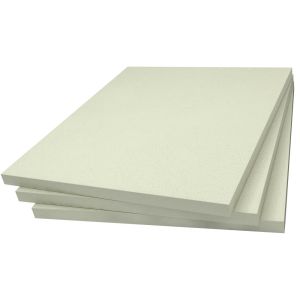 Panel aislante de fibra cerámica Vitcas – Resistente hasta 1260°CTan bajo como 86,52 € 71,50 € Regular Price 125,83 € 103,99 €
Panel aislante de fibra cerámica Vitcas. Resistente hasta 1260 °C. Dimensiones: 1200×1000×25 mm y 1200×1000×50 mm. Baja conductividad térmica a altas temperaturas y alta resistencia a la velocidad de gases, ideal para conductos de calderas, revestimiento de hornos en vidrio y cerámica, y sistemas de escape térmico.
Saber más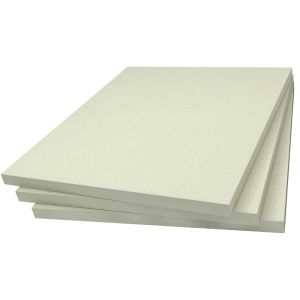 Panel aislante de fibra cerámica Vitcas – Resistente hasta 1430°CTan bajo como 117,98 € 97,50 € Regular Price 151,00 € 124,79 €
El panel aislante de fibra cerámica VITCAS, resistente hasta 1430 °C, ofrece aislamiento térmico eficiente con ciclos de calentamiento y enfriamiento más rápidos. Dimensiones: 1200×1000×25 mm y 1200×1000×50 mm. Ideal para hornos cerámicos y procesos de curvado de vidrio.
Saber más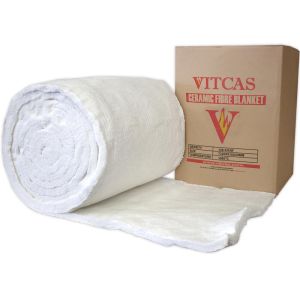 Manta de fibra cerámica aislante – Resistente hasta 1260 °C86,52 € 71,50 € Regular Price 125,84 € 104,00 €
La manta de fibra cerámica VITCAS es resistente a una temperatura máxima de servicio de 1260 °C, con una densidad de 128 kg/m³. Disponible en espesores de 13 mm, 25 mm y 50 mm, se utiliza ampliamente en industrias como la petroquímica, siderúrgica y cerámica. Ideal para aplicaciones de aislamiento térmico y revestimiento de hornos.
Saber más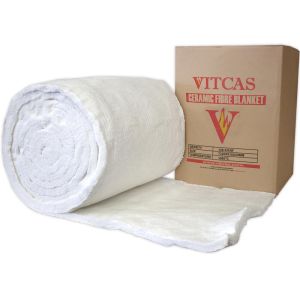 Manta de fibra cerámica aislante – Resistente hasta 1430 °C117,98 € 97,50 € Regular Price 171,46 € 141,70 €
Manta de fibra cerámica VITCAS. Resistente hasta 1430 °C. Densidad de 128 kg/m³. Disponible en espesores de 13 mm, 25 mm y 50 mm. Ideal como aislante térmico en hornos cerámicos para cocción de gres, porcelana y loza fina, así como en aislamiento para alivio de tensiones, protección contra incendios y generación de energía.
Saber más Ladrillos refractarios 230x114x76mmPrecio especial 3,93 € 3,25 € Regular Price 6,28 € 5,19 €
Ladrillos refractarios VITCAS fabricados con un 42 % de contenido de alúmina. Con dimensiones de 230 x 114 x 76 mm, están diseñados para soportar condiciones extremas de hasta 1430 °C. Ideales para una amplia gama de aplicaciones a alta temperatura, incluidos revestimientos de hornos, cerámica, fundición de metales, fraguas y hogares de soldadura, estos ladrillos son la elección perfecta para garantizar durabilidad y eficiencia en proyectos sometidos a calor intenso.
Saber más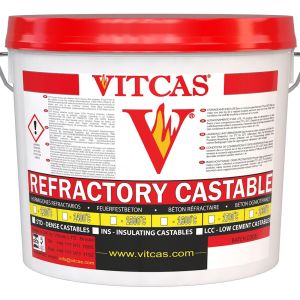 Hormigón refractario 1700°CPrecio especial 73,92 € 61,09 € Regular Price 78,64 € 64,99 €
VITCAS Hormigón Refractario 1700 es ideal para aplicaciones industriales y proyectos de fundición domésticos, especialmente para el revestimiento de bidones metálicos utilizados como hornos tipo crisol a pequeña escala. Gracias a su resistencia a temperaturas de hasta 1700 °C, es incluso apto para la fusión de hierro fundido, garantizando un rendimiento excelente y una gran durabilidad en aplicaciones de alta temperatura.
Saber más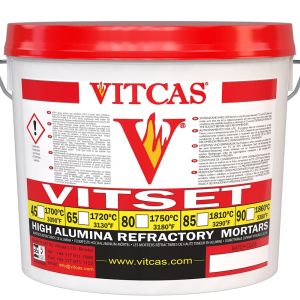 Vitset 45 Mortero refractario 1700°C – premezclado y de fraguado al aireTan bajo como 23,58 € 19,49 € Regular Price 47,18 € 38,99 €
Vitset 45 es un mortero refractario versátil, premezclado, diseñado para soportar temperaturas de hasta 1700°C. Es ideal para aplicar con llana, realizar reparaciones y colocar diversos tipos de ladrillos refractarios e aislantes de alta calidad con clasificación superior a 1400°C. También es apto para su uso con paneles y mantas de fibra cerámica, lo que lo convierte en una solución práctica tanto para reparaciones como para nuevas instalaciones en entornos de alta temperatura.
Saber más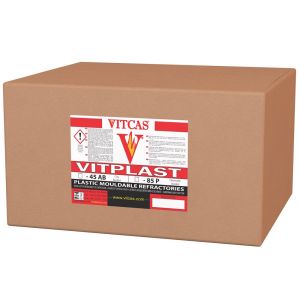 Plástico refractario moldeable cerámico 1600 °C - Vitplast 45ABPrecio especial 55,06 € 45,50 € Regular Price 70,79 € 58,50 €
Vitplast 45AB es un plástico refractario moldeable con una resistencia térmica de hasta 1600 °C. Su fraguado es excepcionalmente rápido, lo que lo convierte en una solución ideal para reparaciones en canales y cucharas en fundiciones, así como en puertas y revestimientos de calderas industriales.
Saber más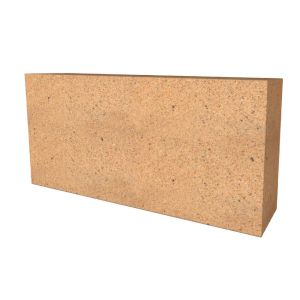 Ladrillos refractarios 60% alúmina 1600 °CPrecio especial 5,51 € 4,55 € Regular Price 7,87 € 6,50 €
Ladrillos refractarios VITCAS 60% alúmina, 230x114x64 mm. Ladrillos refractarios de alta calidad, diseñados para soportar temperaturas extremas de hasta 1600 °C. Ideales para aplicaciones exigentes como el revestimiento de hornos, cerámica, fundición de metales, fraguas y hogares de soldadura fuerte, ofrecen una durabilidad excepcional incluso en los entornos más agresivos.
Saber más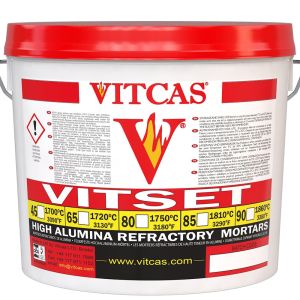 Vitset 80 Mortero refractario 1750°C – alta alúmina, premezcladoPrecio especial 86,52 € 71,50 € Regular Price 125,84 € 104,00 €
Mortero refractario Vitcas – Vitset 80 es un mortero de alta alúmina, premezclado y de fraguado al aire, que resiste temperaturas de hasta 1750°C. Es ideal para la colocación, inmersión, recubrimiento y pulverización de ladrillos refractarios. Adecuado para aplicaciones industriales como la producción de acero y las fundiciones.
Saber más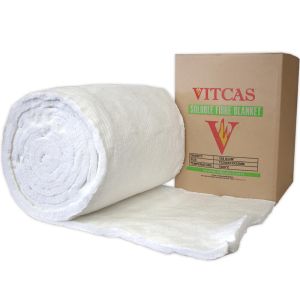 Manta aislante de fibra biosoluble – Resistente hasta 1200 °C94,38 € 78,00 € Regular Price 94,38 € 78,00 €
La manta aislante de fibra biosoluble Vitcas ofrece un rendimiento térmico excepcional, soportando temperaturas de hasta 1200 °C. Sus fibras de baja biopersistencia garantizan la seguridad durante el uso y la manipulación. Con una densidad de 128 kg/m³, proporciona un aislamiento fiable en aplicaciones de alta temperatura.
Saber más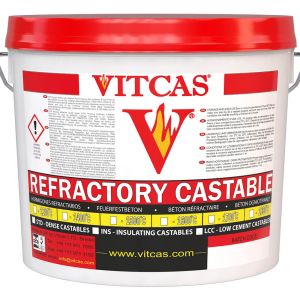 Hormigón refractario aislante 1300°CPrecio especial 47,18 € 38,99 € Regular Price 62,91 € 51,99 €
El hormigón refractario aislante Vitcas es un material de baja densidad, diseñado para el revestimiento de hornos y como capa aislante de respaldo para hormigones refractarios densos. Es resistente a temperaturas de hasta 1300 °C.
Saber más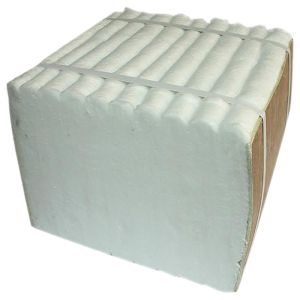 Módulos de Fibra Cerámica -1260°C
Los módulos de fibra cerámica son productos aislantes fabricados a partir de fibras cerámicas que se forman en módulos para su uso en aplicaciones de alta temperatura. Suelen utilizarse en hornos industriales y calderas, así como en instalaciones de generación de energía y procesamiento químico.
Saber másSolicitar información sobre este producto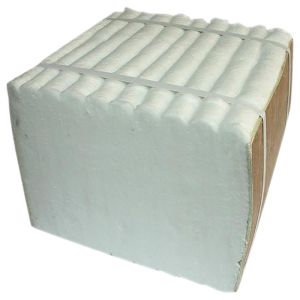 Módulos de Fibra Cerámica -1430°C
Los módulos de fibra cerámica suelen consistir en múltiples capas de material de manta de fibra cerámica que se apilan y comprimen en una forma rígida y modular. Las ventajas de los módulos de fibra cerámica incluyen su resistencia a altas temperaturas, baja conductividad térmica y excelente resistencia al choque térmico. También son ligeros y fáciles de instalar, lo que los convierte en una opción popular para muchas aplicaciones de alta temperatura. Los módulos de fibra cerámica son muy resistentes a las altas temperaturas.
Saber másSolicitar información sobre este producto
Engineered Lining Systems for Combustion Equipment
Incinerators and cremators both use refractory linings, but they do not present identical duties. Waste incinerators may process variable feedstocks that generate abrasive ash, clinker, salts, alkalis, chlorides and other chemically active deposits. Cremators operate as batch equipment with repeated loading, heating, calcination and ash-removal cycles. Their primary and secondary chambers, combustion controls and flue-gas treatment are designed as an integrated system.
A suitable lining normally combines a mechanically durable hot face with lower-conductivity insulation behind it. Mortars, expansion joints, anchors, burner ports, door reveals and penetrations must remain compatible with both layers. Refractory selection should preserve the original chamber volume, flow path and combustion-zone geometry as well as limiting shell temperature and heat loss.
Functions Within an Incinerator or Cremator Lining
| Component | Primary function | Critical selection factors |
|---|---|---|
| Dense refractory brick | Forms a durable hot face and retains the designed chamber geometry | Temperature, load, abrasion, ash chemistry, thermal cycling and joint design |
| Dense refractory castable | Creates monolithic shapes around complex zones, burner blocks and local repairs | Installation water, placement, anchors, curing, dry-out, erosion and chemical exposure |
| Refractory mortar | Sets compatible bricks and closes the specified joints | Brick chemistry, joint thickness, setting mechanism, temperature and atmosphere |
| Plastic mouldable refractory | Rams into defined repairs and difficult geometries | Sound substrate, compaction, repair depth, heat-up procedure and local wear |
| Insulating castable | Provides a shaped, low-density backup layer behind a compatible hot face | Thermal conductivity, service temperature, strength, thickness and anchoring |
| Fibre blanket, board or module | Reduces heat transfer and stored energy with a low-mass insulation layer | Temperature grade, shrinkage, gas velocity, abrasion, fixing system and fibre controls |
Dense Hot-Face and Repair Materials
Dense refractories are used where the lining must withstand direct combustion exposure, mechanical loading, abrasion or local impact. They generally have greater mass and thermal conductivity than insulation products and should not be treated as the principal energy-saving layer without heat-transfer data.
| Material | Temperature | Typical lining role |
|---|---|---|
| 42% Alumina Fire Bricks | 1430°C | Dense brick hot faces in primary and secondary chambers where the mechanical and chemical duty is suitable |
| 60% Alumina Refractory Fire Bricks | 1600°C | Higher-alumina brickwork for more demanding temperatures and selected aggressive zones |
| Refractory Castable Grade 1700 | 1700°C | Dense monolithic linings, shaped sections, burner areas and compatible incinerator repairs |
| Vitset 45 Refractory Mortar | 1700°C | Ready-mixed air-setting mortar for compatible dense and insulating refractory bricks |
| Vitset 80 Refractory Mortar | 1750°C | Higher-alumina brick setting for selected severe duties requiring verified chemical compatibility |
| VITPLAST 45AB Plastic Mouldable | 1600°C | Ram-installed local repair of compatible brick and monolithic linings |
Choose between refractory fire bricks, refractory castables and plastic mouldable refractories according to geometry, access, wear pattern, shutdown duration and the condition of the retained lining. A repair material should bridge onto sound refractory and must not conceal widespread failure or corroded anchors.
Thermal Insulation Materials
Insulation reduces casing temperature and energy loss, but each format has a different mechanical capability. A blanket can conform to irregular surfaces, a board provides controlled rigidity, a module forms a compressed lining system, and an insulating castable creates a shaped monolithic backup layer. None should be exposed to impact, abrasion or burner velocity beyond its verified duty.
| Material | Temperature | Typical insulation role |
|---|---|---|
| Insulating Refractory Castable | 1300°C | Low-density lining or backup insulation behind a compatible dense hot face |
| Biosoluble Fibre Blanket | 1200°C | Flexible low-mass insulation where the product grade and exposure are appropriate |
| Ceramic Fibre Blanket 1260 | 1260°C | Flexible backup, joint and furnace insulation protected from unsuitable wear and gas velocity |
| Ceramic Fibre Blanket 1430 | 1430°C | Higher-temperature flexible insulation for suitably designed and secured lining systems |
| Ceramic Fibre Board 1260 | 1260°C | Rigid panel insulation for controlled shapes, ducts and protected lining areas |
| Ceramic Fibre Board 1430 | 1430°C | Higher-temperature rigid insulation where shrinkage, support and gas velocity are addressed |
| Ceramic Fibre Modules 1260 | 1260°C | Compressed modular insulation for compatible industrial chamber and casing designs |
| Ceramic Fibre Modules 1430 | 1430°C | Higher-temperature modular lining requiring a project-specific anchor and installation pattern |
Insulation thickness must be calculated from the complete multilayer construction. Use thermal-conductivity data at the relevant mean temperatures and include the hot face, joints, anchors, shell, ambient conditions and allowable external surface temperature. A material's maximum temperature does not predict the cold-face temperature.
Selecting Materials by Equipment Zone
Primary Combustion Chamber and Hearth
The primary chamber receives the charge and may experience impact, abrasion, concentrated heat release, ash movement and cleaning tools. Hearths, loading areas and ash discharge zones commonly require a mechanically robust dense hot face. Establish the permitted feed composition, calorific range, ash chemistry and whether low-melting deposits or clinker can form before choosing an alumina brick or castable.
Secondary Combustion Chamber
The secondary chamber supports oxidation of gases leaving the primary chamber. Its volume, convolutions, air-injection position and lining geometry influence temperature distribution and gas residence time. When relining or re-bricking, preserve the approved design. Any change that affects the flow path or chamber volume may require recalculation, recommissioning and verification under the applicable permit.
Burner Blocks, Ports and Flame-Impingement Zones
Burner surrounds and flame-facing areas can experience local temperatures and heat fluxes above the chamber average, together with high gas velocity. Dense refractory castable or shaped brickwork may be required to protect lower-density insulation. Maintain the burner manufacturer's geometry, clearances and flame pattern; an incorrectly shaped repair can alter combustion or create a new hot spot.
Charging Doors, Reveals and Ash Openings
Door areas undergo frequent thermal cycling and mechanical disturbance. Inspect reveals, lintels, jambs, seals and interfaces between refractory and steel. Use expansion allowances and compatible repair geometry so that doors close correctly and the chamber remains gas tight under the intended operating pressure.
Flue Transitions and Treatment Interfaces
Ducts between the combustion chamber, heat-recovery equipment and flue-gas treatment can experience thermal gradients, particulate erosion and acid-gas exposure. Confirm the gas temperature and chemistry at each location. A material suitable inside the hot chamber may not be suitable where condensation or concentrated deposits can occur further downstream.
Incinerator Feed and Chemical Exposure
Waste classification and feed control are fundamental to refractory life. Plastics, salts, glass, metals, soils, clinical residues, animal by-products and high-calorific fractions can change flame temperature, ash fusion, deposits and gas chemistry. The permitted waste stream and actual operating records should inform the lining specification.
Do not infer resistance to a specific slag, salt, alkali, chloride, sulphur compound or molten deposit from alumina content or temperature rating alone. Obtain relevant chemical-resistance data and examine failed material where possible. Repeated glazing, penetration, swelling or accelerated joint loss normally requires a root-cause review rather than a higher temperature grade alone.
Cremator Relining and Combustion Geometry
Cremation is a batch process, so the lining experiences repeated changes in heat release and temperature. Current Great Britain guidance treats good combustion control, secondary-chamber residence time, oxygen and temperature as linked operating parameters. Refractory replacement supports these controls by preserving chamber integrity, insulation and gas flow, but does not replace burners, sensors, control logic or flue-gas treatment.
When re-bricking a cremator, maintain the original secondary-chamber convolutions. If the relining changes the chamber design or volume, the residence-time calculation and commissioning verification may no longer remain valid. Coordinate refractory work with the cremator manufacturer, competent engineer and environmental permit regulator before altering any internal geometry.
Temperature Ratings and Regulatory Conditions
The combustion-gas temperature required by a permit is not the same as the maximum service temperature of the refractory. The lining surface may see local peaks near burners, while backup insulation operates at a lower temperature through the lining gradient. Select materials from calculated or measured lining temperatures with the engineering margin required for local hot spots, cycling and ageing.
Requirements differ by process and jurisdiction. For example, current guidance for certain animal-by-product incinerators in England specifies exhaust gas at 850°C for two seconds or 1100°C for 0.2 seconds. Current crematoria guidance in Great Britain sets operating conditions by cremator and abatement type and requires a minimum two-second secondary-chamber residence time, subject to the permit and any conditions authorised by the regulator. These figures are combustion requirements, not refractory selection temperatures.
No VITCAS brick, castable, mortar or insulation product by itself makes an incinerator or cremator compliant. Compliance depends on the complete equipment design, permitted feed, combustion control, monitoring, gas tightness, flue-gas treatment, operation and maintenance.
Installation, Curing and Controlled Dry-Out
Survey the existing lining and steelwork before demolition. Record dimensions, layer thicknesses, expansion joints, anchors, burner openings, sensor positions and chamber geometry. Removed refractory can reveal corrosion, heat paths and hidden delamination that must be addressed before installing new material.
Measure water accurately, use clean equipment and follow the current instructions for each castable or mortar. Excess water can increase porosity, shrinkage and drying demand. Place and compact castables within their working time, keep brick joints within the specified thickness, and install fibre layers with the required compression, overlaps and anchors.
Wet refractory contains water that must be removed under a controlled dry-out schedule. Rapid heating can generate internal steam pressure, cracking or disruptive spalling. The schedule depends on product, thickness, total repair volume, ambient curing, ventilation and equipment geometry. Surface dryness or a stated room-temperature cure time does not authorise full-temperature operation.
Inspection, Maintenance and Repair
- Trend shell temperatures: compare thermographic or contact measurements under equivalent operating conditions and investigate new hot spots.
- Inspect the hot face: look for open joints, displaced bricks, loss of section, glazing, chemical penetration, spalling and impact damage.
- Check monolithic areas: assess cracks by width, depth, location and movement rather than appearance alone.
- Examine anchors and interfaces: exposed, distorted or corroded anchors and gaps between materials can indicate deeper failure.
- Inspect fibre systems: identify shrinkage gaps, damaged modules, loose fixings, erosion and exposed casing.
- Preserve gas tightness: check doors, penetrations, ducts and casing joints for leakage or air ingress.
- Record repairs: retain material batch, location, dimensions, installation method, curing, dry-out and post-commissioning inspection data.
Local repair is appropriate only where the retained lining and anchors are sound. Recurring damage, widespread cracking, deep chemical attack, abnormal hot spots or loss of chamber geometry may require sectional or complete relining and investigation of the operating cause.
Safe Shutdown and Refractory Maintenance
Before entering or disturbing an incinerator or cremator, isolate and secure fuel, electrical, hydraulic, pneumatic and mechanical energy sources. Allow adequate cooling, verify the atmosphere and determine whether confined-space controls apply. Ash, deposits and used refractory may contain hazardous process residues; assess them before cutting, sweeping, removal or disposal.
Review current safety data sheets for new and existing lining products. Control dust at source and select respiratory, eye, skin and other protection from the task-specific COSHH assessment. Ceramic fibre, biosoluble fibre and cementitious refractories can have different classifications and handling requirements despite a similar appearance. Do not rely on PPE as the sole control where enclosure, wet methods or suitable extraction can reduce exposure.
Frequently Asked Questions
Can the same refractory be used in incinerators and cremators?
Some material families can be used in both, but suitability is zone- and process-specific. Incinerator feed chemistry, ash and abrasion may differ substantially from the repeated batch cycling and regulated chamber geometry of a cremator.
What is the best refractory for an incinerator lining?
There is no universal best material. The hot face must be selected for temperature, ash chemistry, abrasion, impact, thermal cycling and geometry, while separate insulation layers control heat loss and casing temperature.
What is the difference between 42% and 60% alumina fire bricks?
The listed 42% alumina brick is rated to 1430°C, while the 60% alumina brick is rated to 1600°C. Alumina content and temperature are only part of the selection; compare load, porosity, abrasion, thermal shock and chemical-resistance data for the actual zone.
Should I use refractory brick or castable?
Brickwork provides defined units, joints and local replaceability. Castable forms monolithic and complex shapes around ports, burners and repairs but requires controlled mixing, placement, anchoring, curing and dry-out. Many linings combine both.
Is Refractory Castable 1700 an insulation material?
It is a dense hot-face castable. Its temperature resistance and structural role do not make it equivalent to a low-density insulating castable or fibre layer. Use thermal-conductivity data for heat-loss design.
Can ceramic fibre blanket be used as an exposed hot face?
Only where the specified grade, fixing system and surface condition are verified for the temperature, gas velocity, abrasion and chemistry. A blanket suitable as protected backup insulation may erode rapidly under direct burner impingement or ash movement.
What is the difference between fibre blanket, board and modules?
Blanket is flexible, board is rigid and modules are compressed assemblies installed to a defined pattern. Each format has different jointing, support, shrinkage and gas-velocity considerations.
Does a 1700°C material mean the incinerator can operate at 1700°C?
No. The published figure is a material limit under stated conditions, not an equipment operating approval. Burner zones can also expose the lining to temperatures and heat fluxes different from the chamber reading.
Is 850°C the required operating temperature for every incinerator and cremator?
No. Requirements depend on the process, feed, equipment, jurisdiction and permit. Some current guidance uses 850°C with a defined residence time, but other conditions can apply. Follow the equipment permit and regulator-approved operating conditions.
Which mortar should be used with refractory bricks?
Match the mortar to the brick chemistry, temperature, atmosphere and specified joint thickness. Vitset 45 and Vitset 80 serve different alumina and duty requirements; confirm the current technical data and approved brick-and-mortar combination.
Can VITPLAST 45AB be used for an emergency repair?
It is intended for rapid ram-installed repairs to compatible refractory linings. The damaged area must still be safely shut down, prepared, compacted and returned to service under an approved heat-up procedure. It must not be used to mask structural or anchor failure.
Why is refractory dry-out necessary?
Castables and mortars contain installation water. Heating them too quickly can create steam pressure inside the lining and cause cracking or disruptive spalling. Use a product- and installation-specific dry-out schedule.
Can relining change cremator performance?
Yes. Changes to secondary-chamber volume, convolutions, air paths or sensor relationships can affect gas residence time and combustion verification. Preserve the approved geometry or arrange recalculation and recommissioning.
What causes hot spots on the outer casing?
Possible causes include lost lining thickness, open joints, displaced insulation, fibre shrinkage, failed anchors, gaps around penetrations or an altered operating condition. Compare readings under equivalent loads and inspect the complete lining system.
When should an incinerator lining be replaced rather than patched?
Consider sectional or complete replacement when damage is widespread, the retained material is weak, anchors are compromised, chemical penetration is deep, chamber geometry has changed or local repairs repeatedly fail.
Can refractory materials reduce emissions?
A sound, well-insulated lining helps maintain designed temperature, gas tightness and chamber geometry, which supports combustion control. It does not replace feed control, burners, oxygen and temperature monitoring, residence-time verification or flue-gas treatment.